
How to Search Clare County Court Records
The main front door for Clare County court records is MiCOURT Case Search, the statewide public portal run by the Michigan courts. The county does not publish a separate local case-search site, so this tool at MiCOURT Case Search carries most of the load. It can surface civil, criminal, traffic, domestic, and probate case information where the Clare County courts have posted it. The search is name driven, so a person or business name is the usual starting point for a Clare County court records lookup.
Gather the full legal name of the party before you start, plus any middle name or date range that helps narrow the list. Common names return long result sets in Clare County, so a filing year or a case status trims the noise fast. The portal confirms that a case exists and shows summary case data, yet it does not post every filed document as an image. Older files and sealed matters may not appear online at all.
- Open MiCOURT Case Search in a web browser.
- Enter the party name, usually a last name and first name.
- Add a status filter or a date range if the result list runs long.
- Submit the query with the Search button.
- Open a matching result to read the case summary and docket entries.
The Michigan courts explain how trial-court files are built, stored, and released on the state records-management page. That framework helps show why a search behaves the way it does.
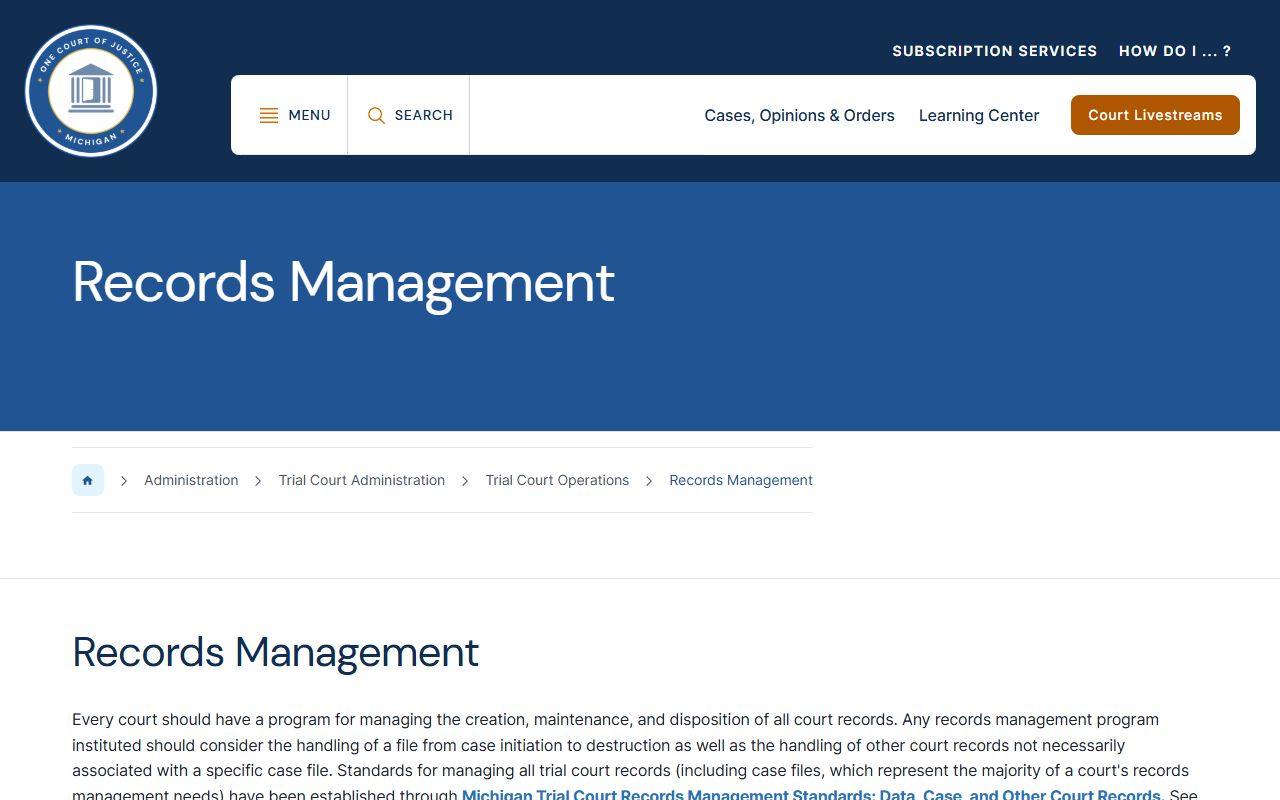
The same framework is why a Clare County court records search can display a clean case summary online while some documents still sit in a paper file at the Harrison courthouse.
Clare County Court Records Search Fields
The MiCOURT interface keeps the field set short and name based. Because the page is heavily client rendered, the court-level options can shift between visits, but the core controls stay steady. The table below lists the fields recovered from the public portal, along with how each one behaves during a Clare County court records search.
| Field Label | Type | Required | Notes / Format |
|---|---|---|---|
| Name | Text | Yes | Primary search key; enter a party or business name |
| Status | Dropdown | No | Filter by case status such as open or closed |
| From | Date | No | Start of the filing date range |
| To | Date | No | End of the filing date range |
| Search | Button | No | Runs the query against posted case data |
| Reset | Button | No | Clears the fields to start over |
A wide name plus a tight date range is usually the best mix. If a Clare County matter does not appear at all, the record may live in a separate court-level system or in a paper file that only the clerk counter can pull.
Types of Clare County Court Records
Clare County court records span every division that meets at the courthouse in Harrison. Circuit court holds the higher civil matters and felony files, district court keeps the lower civil, misdemeanor, and citation cases, and the probate and family division manages estates and guardianships. Marriage records sit with the Clare County clerk, while a divorce splits into a court file and a separate state vital record.
The record types most often pulled in a Clare County court records search include the following.
- Civil records filed in circuit court, with lower-value disputes in district court.
- Criminal records, with felonies in circuit court and misdemeanors in district court.
- Family records such as divorce, custody, and support cases.
- Probate records covering estates, wills, guardianships, and conservatorships.
- Traffic citations handled at the district level and covered in the Clare County traffic court records.
- Juvenile records, which are restricted by statute and rule.
The Michigan Court Rules define each of these record types and how a court must keep them. Chapter 1 of the rules, including MCR 1.109, sets the base definitions and is published in the state court rules book, chapter 1.
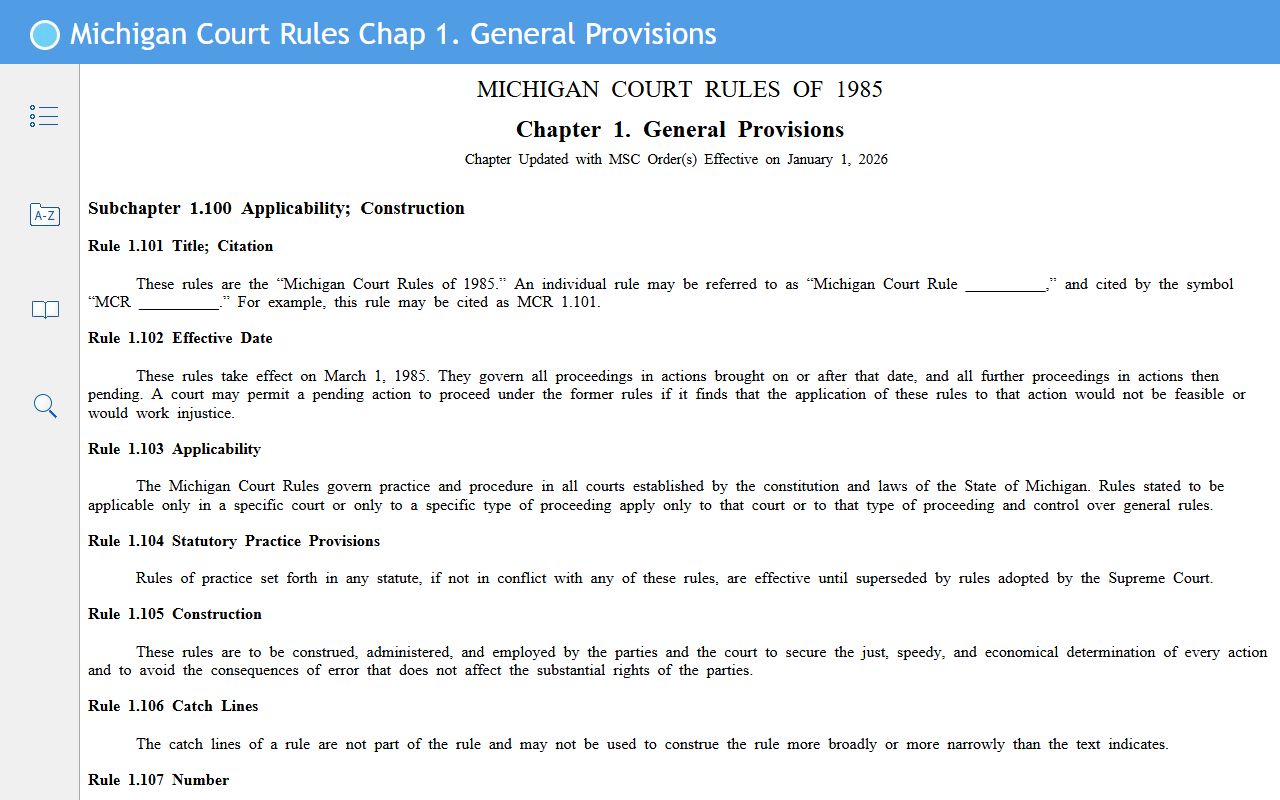
Those definitions are why Clare County court records read consistently from one division to the next, even though the cases behind them differ so much.
What Clare County Court Records Show
A single case file gathers many parts under one case number. The court rules govern the structure, not local practice, so a Clare County court records file follows the same pattern whether it opened in district, circuit, or probate court. The docket portion lists every filing in order, and a deeper look at those entries lives in the Clare County court dockets. The table below breaks down the fields most readers care about.
| Field | What It Shows |
|---|---|
| Case Number | The unique identifier assigned when the case is filed |
| Filing Date | The date the court opened the matter |
| Court / Level | Whether the case sits in district, circuit, or probate court |
| Judge | The judge or magistrate assigned to hear the case |
| Parties | Plaintiff and defendant, or petitioner and respondent |
| Charges / Cause | The criminal charges filed or the civil cause of action |
| Disposition | The outcome, such as disposed, closed, or dismissed |
Status language on Clare County court records moves from pending or open toward disposed or closed as a case runs its course. Protected personal data, such as Social Security numbers and financial account numbers, is redacted or held nonpublic under the court rules. Chapter 8 of the rules, which includes MCR 8.119 on court-record access, is published in the state court rules book, chapter 8.
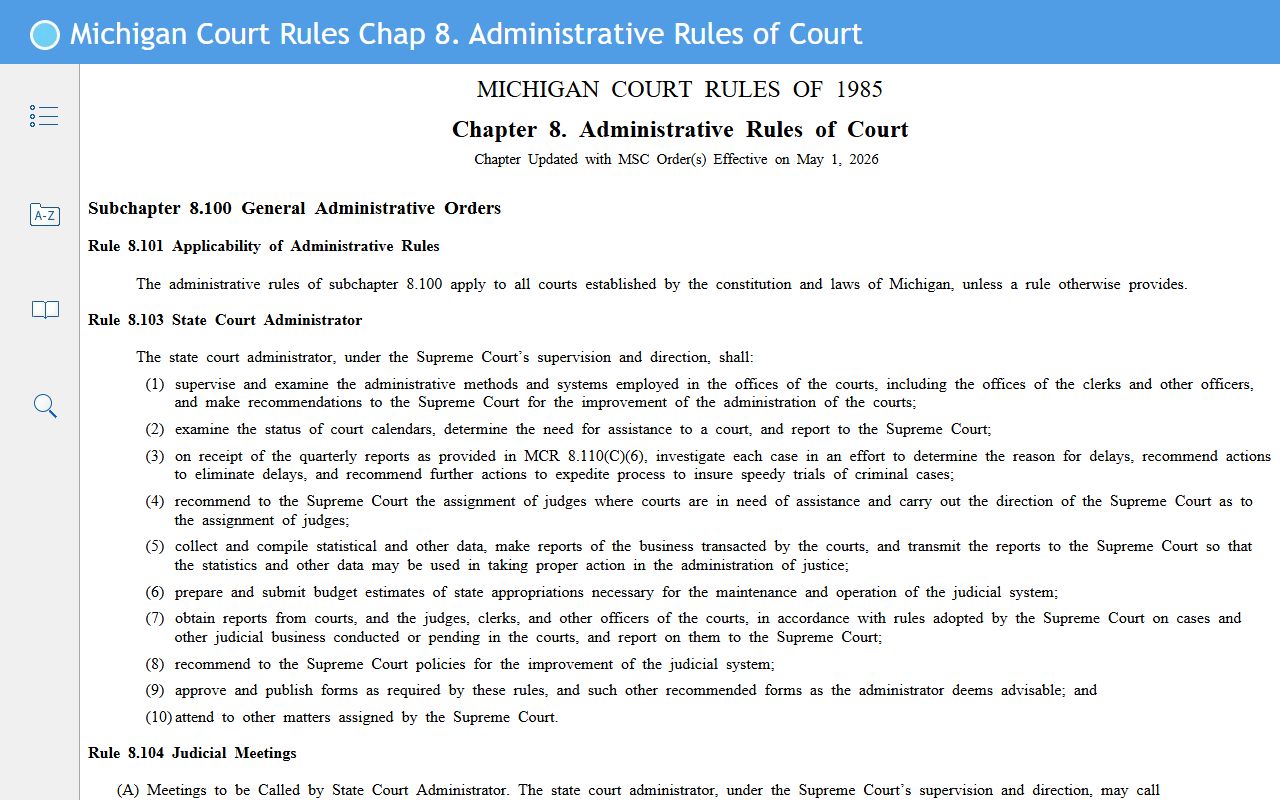
Reading those fields together lets a user tell a Clare County court records summary apart from the full underlying file, which may still require a counter visit.
Public Access Framework for Clare County Court Records
Michigan law leans toward openness. The state Freedom of Information Act sets the public policy that people are entitled to full and complete information about public records, subject to the act's exceptions, under MCL 15.231. The request-processing backbone, including the role of a FOIA coordinator, lives in MCL 15.233. For court files specifically, MCR 8.119 and MCR 1.109 control what can be seen, copied, or sealed.
The FOIA statute is a useful reference when a search stops at a summary result.
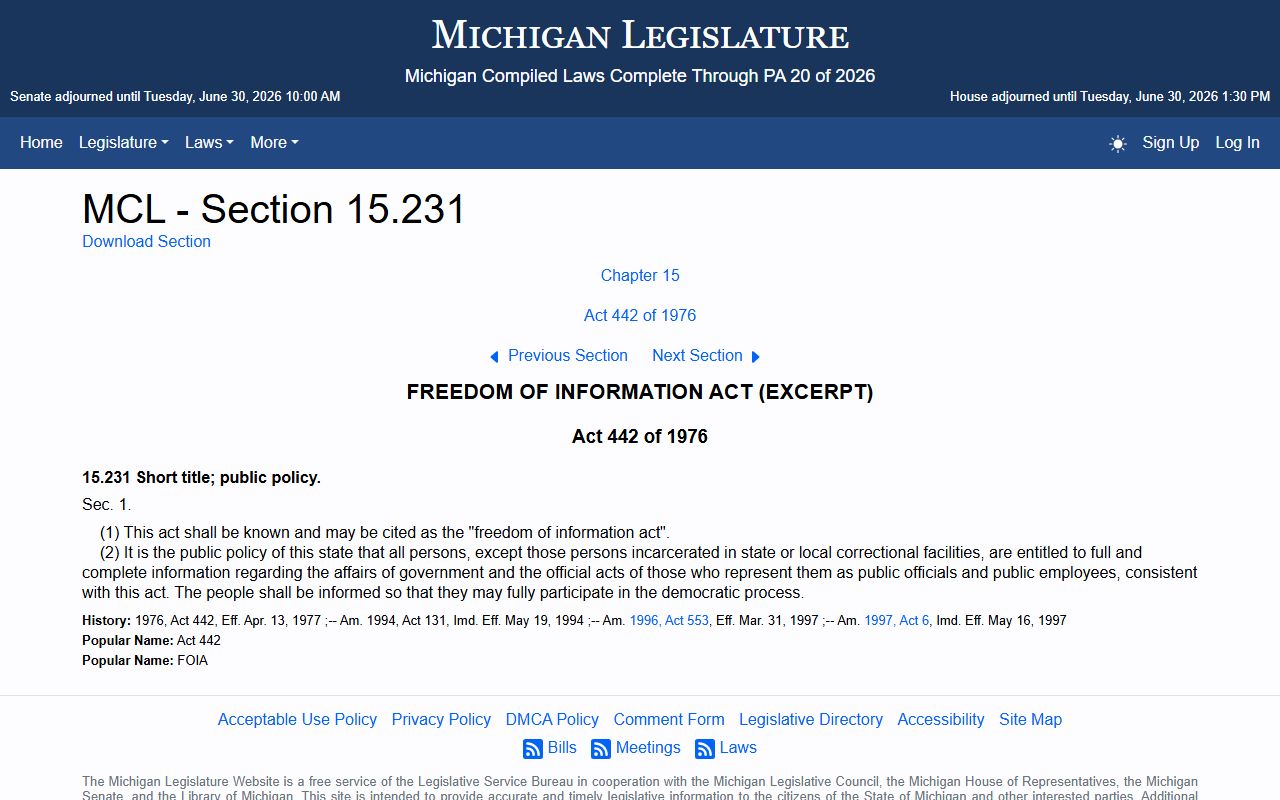
That statute helps explain why a person can often confirm a Clare County court records case exists while PII rules, sealed-record rules, and image limits still govern what can actually be inspected or copied.
In practice, the Clare County channels stay split by office. The courts control court files, the county clerk holds marriage and vital records, and the sheriff handles accident and agency records through FOIA. Picking the right office the first time is faster than filing a broad request and waiting for it to be routed.
Note: Michigan law favors access to court records, but PII, sealed files, and juvenile matters remain protected and may never surface in a public online search.
Sealed and Confidential Clare County Court Records
Not every file is open. Several categories of Clare County court records are restricted by statute or court rule, and a public search will simply skip them. Juvenile cases are usually sealed or reachable only by court order under the juvenile-records law. Mental health proceedings are generally closed. Private marriage records carry their own privacy treatment, and protected personal information is redacted throughout court files.
Sealed and expunged records are removed from normal public search, though some residual traces can remain in state systems. Michigan now runs both application-based and automatic set-aside paths. The application statute is MCL 780.621, and automatic relief under the Clean Slate program flows from MCL 780.621g. Active or pending cases block automatic relief, so a set-aside does not happen while a matter is still open.
The Michigan courts run a dedicated program on protected personal identifying information, described on the state PII initiative page.
Those PII rules are one reason a Clare County court records summary may show a case while hiding the sensitive data inside the file.
Note: A dropped public listing does not mean every internal database is wiped, so confirm set-aside status through the proper court or state channel before relying on it.
Requesting Clare County Court Records in Person
When a file is not online, the fallback chain is short and reliable. The county clerk counter at the Harrison courthouse is the first stop for older files, certified copies, and matters the portal does not carry. Public searching in the vault closes at 4:00 pm, ahead of the general office close, so plan a counter visit for the earlier part of the day. Bring the party name, a case number if you have one, and a payment method for copies.
Mail and formal FOIA requests cover the same ground for Clare County court records when a trip to Harrison is not practical. The request-processing rules under MCL 15.233 set how a written request is handled once it reaches the right office.
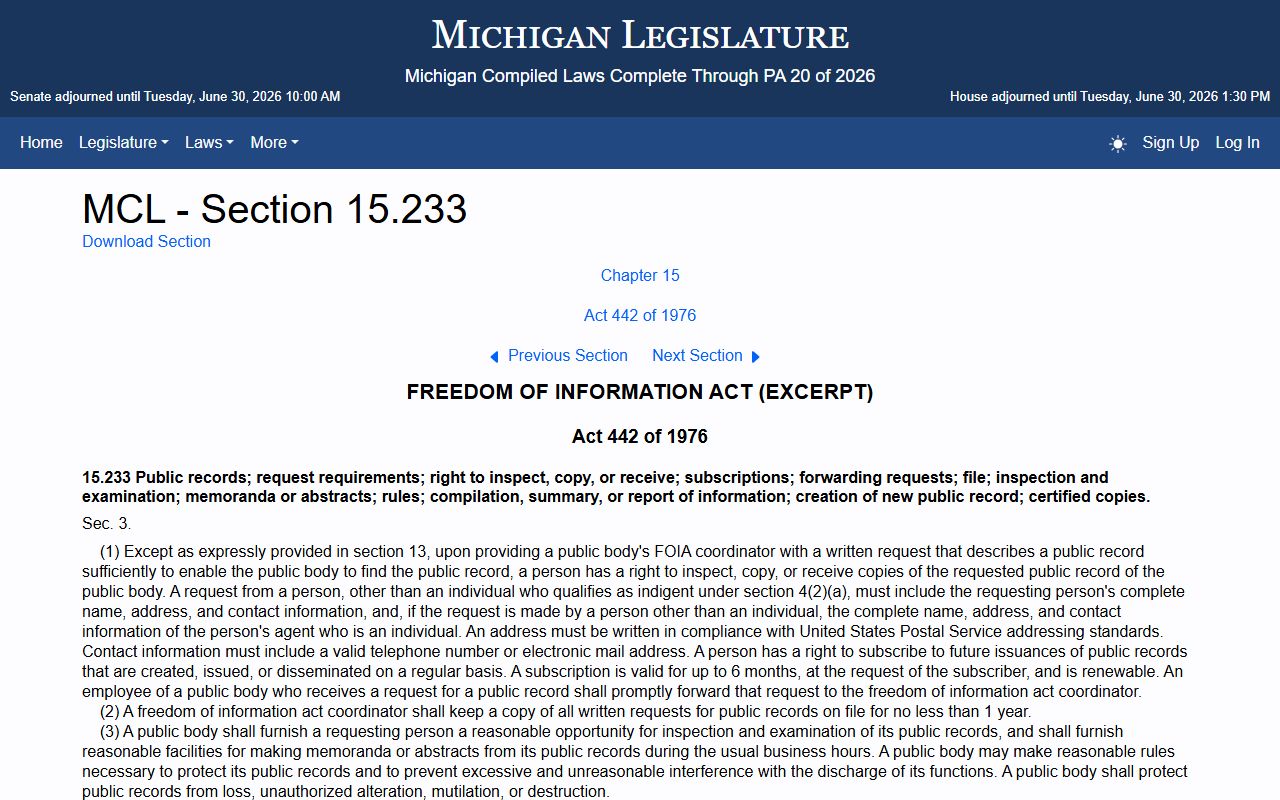
Following that process is the surest way to obtain Clare County court records that the online portal leaves out.
Clare County Clerk / Register of Deeds
225 W. Main Street
P.O. Box 438
Harrison, MI 48625
(989) 539-7131
Mon–Fri 8:00 am–4:30 pm; vault searching closes 4:00 pm
Lori Mott serves as the Clare County Clerk and Register of Deeds, and the same office handles land records, vital records, and marriage records alongside its court-records support role.